
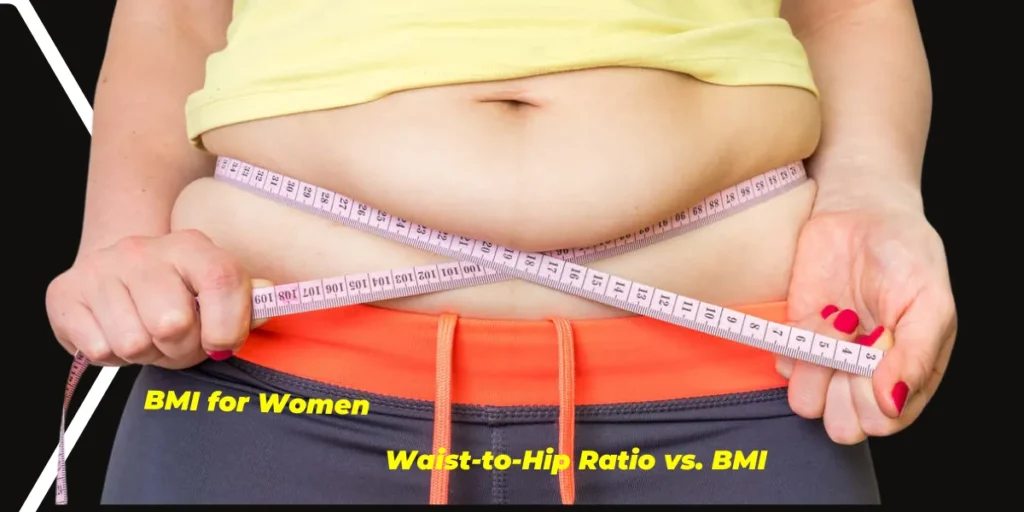
BMI for Women – Many women struggle with measuring their body fat percentage. Body fat is a stored form of energy that we use throughout our lives. We need body fat to survive and thrive. When we eat food, some is used to build muscle mass, and some is used to store energy. Our bodies store excess calories as body fat.
To lose weight, we must burn more calories than we consume. If we don’t do any exercise at all, we’ll gain back what we lost. But if we work out regularly, we can reduce our body fat percentage.
There are many alternatives to measuring body fat in women, including calipers, bioelectrical impedance analysis, skinfold measurements, and ultrasound. But these methods aren’t always accurate, especially for women with large breasts and heavy thighs.
In this article, we will cover three new alternative methods for measuring body fat for women. We will compare each method against the traditional “skinfold testing” method and see how well they work. We will also discuss why most alternative methods fail to accurately measure body fat. Â
The Body Mass Index (BMI) determines whether someone is overweight or obese. You can use the BMI calculator to find your BMI. If you’re underweight, you may need to gain weight or lose weight (BMI for Women).
Despite being used for decades as the “go-to” measurement for health based on size, BMI has been widely criticized for oversimplifying what healthy means.
BMI, or Body Mass Index, is the measurement used to compare your weight to your height (or vice versa).
BMI vs Waist-to-Hip Ratio: What Women Need to Know
However, how often should I weigh myself? Is weighing yourself every day a good idea? What else should I consider before deciding whether or not to weigh myself daily?
The Body Mass Index (BMI) is a widely accepted method for determining one’s risk of developing obesity-related diseases, such as diabetes and heart disease.
Body Mass Index (BMI) is calculated using weight and height measurements. BMI is a ratio of weight to height squared. To calculate BMI, divide weight in kilograms by height in square meters. An ideal body weight range is 18.5-24.9 kg/m². Overweight people have BMIs ranging from 25 to 29.9 kg/m^2; heavier people have BMIs more significant than 30 kg/m^2.
While BMI is useful for predicting health risks, it has some limitations. For example, it only considers weight and ignores other important aspects of overall health, such as waist circumference. In addition, BMI fails to distinguish between lean tissue and fat tissue.
Limitations of BMI as a Measure of Body Composition
Many claim BMI is outdated and inaccurate and shouldn’t be used in medical and fitness settings.Â
BMI (Body Mass Index) is a widely used method for assessing body weight and classifying individuals into underweight, normal weight, overweight, and obese. However, there are limitations to using BMI as the sole indicator of health and body composition, leading to its being criticized as outdated and inaccurate. Here are some reasons why BMI may be considered obsolete and inaccurate:
Limited Assessment of Body Composition:
BMI is a simple calculation that uses height and weight to estimate body fat. However, it does not differentiate between fat and muscle mass, which can vary significantly among individuals. As a result, individuals with a higher muscle mass, such as athletes or bodybuilders, may be classified as overweight or heavier based on their BMI, even though they have low body fat levels.
Does Not Account for Body Proportions:
BMI does not consider body proportions or variations in fat distribution. For example, individuals with greater upper-body muscle mass may have a higher BMI due to increased weight. Still, this doesn’t necessarily mean they have excess body fat or the health risks associated with obesity.
Ignores Individual Differences:
BMI does not account for age, gender, bone density, or genetic variations that can influence body weight and composition. As a result, it may not accurately assess the health risks of specific individuals.
Inadequate for Certain Populations:
BMI may not be suitable for specific populations, such as athletes, older adults, or individuals with higher muscle mass or different body proportions. These groups may require more specialized assessments, such as body fat percentage or waist-to-hip ratio, to better evaluate their health status.
Health Risks Vary:
Health risks associated with weight and body composition can differ among individuals. Physical activity level, diet, overall fitness, and medical history significantly determine health outcomes. BMI alone may not capture these crucial factors.
It’s important to note that while BMI has its limitations, it can still give many individuals a general indication of weight status. However, it should be interpreted alongside other assessments, such as body fat percentage, waist circumference, and overall health markers, to obtain a more comprehensive understanding of an individual’s health and risk factors.  So, what is a better measurement?
BMI alternatives
So, what else should you consider besides body fat percentage? Other ways to measure your health include Body Fat Percentage, Waist Circumference, and waist-to-hip ratio. These measurements provide a more accurate picture of your health.
It has been suggested that WHR is a better indicator of health risk than BMI because it accounts for body shape. For example, women who carry excess weight around their middle tend to store more fat around their hips than around their waist. In contrast, men with large bellies often have less fat around their midsection than around their hips.
Body Fat Percentage
The first alternative, Body fat percentage, is the relative amount of body fat a person has.
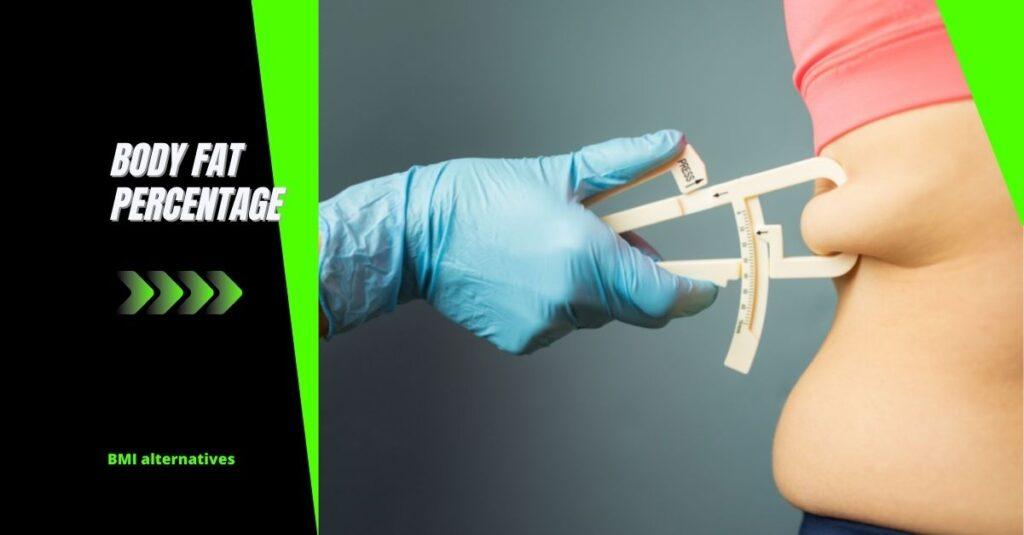
Body fat percentage measures the amount of fat stored in your body. It is calculated using a particular caliper that measures the circumference of your arms, legs, chest, and stomach. These measurements are added and divided by 4 to get the total body fat percentage. Body fat percentage is a more accurate representation than BMI because it considers the amount of muscle you have.
Waist Circumference Measurement
The waist circumference can be used as an alternative to BMI, even without a hip measurement; this is useful for individuals who are obese or otherwise have difficulty making a hip measurement. Given the health risks associated with having a high percentage of abdominal fat, measuring waist circumference can give you an idea of whether you are at risk.Â
- Use a measuring tape.
- Surround the measuring tape at the natural waist, between the lowest rib and the top of the hip bone, or at the navel button.
- The waist circumference (WC) measures around the most comprehensive portion of the abdomen at the level of the umbilicus. A standard WC is 35 to 40 inches. If it exceeds 40 inches, it indicates obesity.
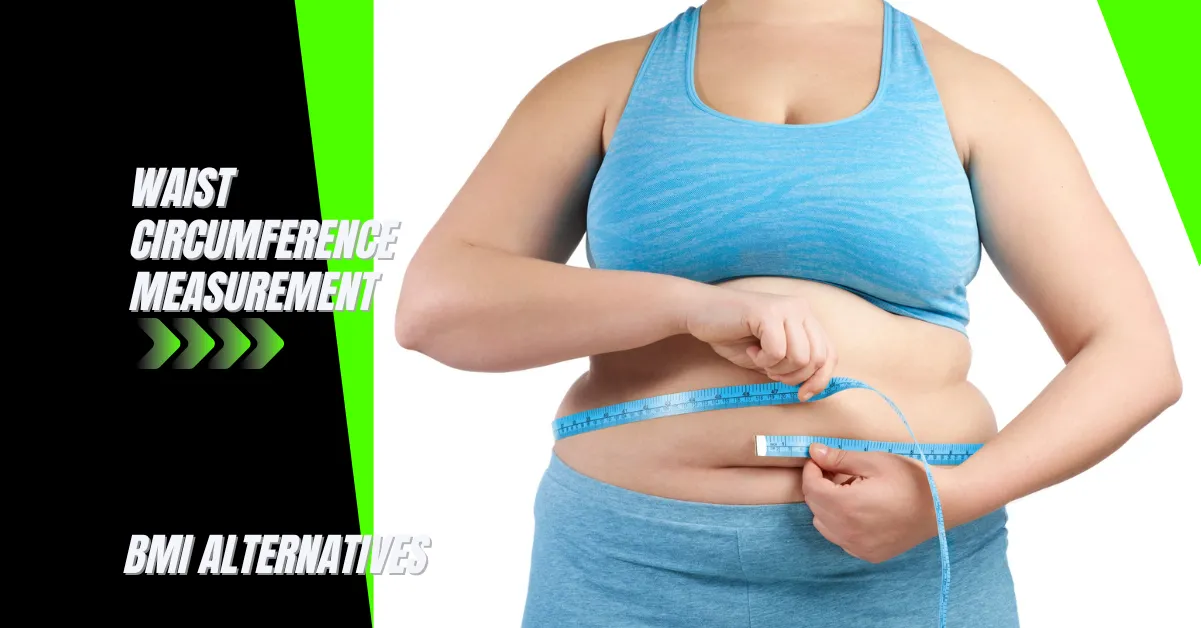
According to the National Heart, Lung, and Blood Institute, women with a waist circumference of over 35 inches and men with a waist circumference of over 40 inches have an increased risk of developing heart disease and Type 2 diabetes.
Hip Circumference (HC)
Hip circumference is a measurement taken around the widest part of the hips. It is commonly used in conjunction with waist circumference to calculate the waist-to-hip ratio (WHR), which is a valuable indicator of body fat distribution and overall health. Hip circumference measures around the fullest part of the buttocks. The average hip circumference ranges between 34 inches and 38 inches. If the HC exceeds 39 inches, then it indicates overweight.
Waist to Hip Ratio
What is the waist-to-hip ratio (WHR)? Is it essential to measure it? And why should I care?
Waist-to-height ratios measure the proportion of fat stored in the abdominal region compared to total body size. Abdominal fat stores are associated with an increased risk of heart disease and diabetes.
WHR is calculated by dividing the waist measurement by the height. A high WHR means that the person’s waistline is larger relative to his or her height. This number helps determine whether or not you are at risk for developing diabetes, heart disease, high blood pressure, stroke, and other health conditions.Â
Assessing Body Fat Distribution: Waist-to-Hip Ratio as a Tool
A higher WHR indicates a higher concentration of body fat around your middle. Lowering your WHR can reduce your risk of these diseases.
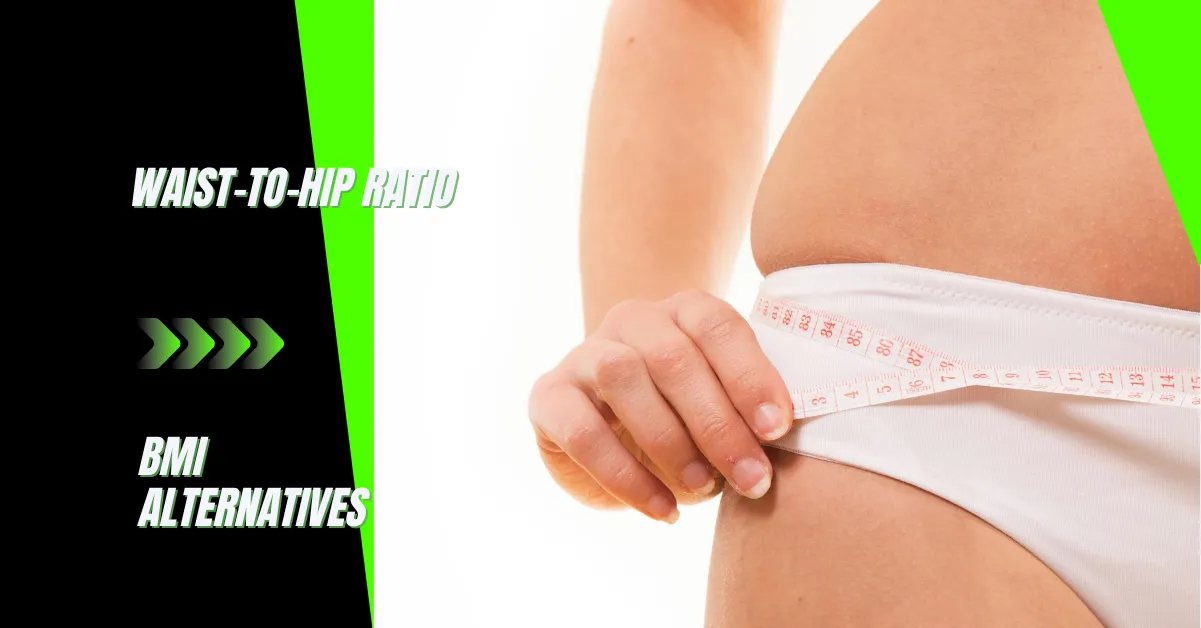
Calculating Waist-to-Hip Ratio: A Simple and Effective Method
A measurement of the waist is taken at either the minor point of the waist or just above the belly button and divided by a measurement of the widest part of the hips; results larger than 0.85 for women or 0.9 for men indicate abdominal obesity.
-
Measure the waist circumference.
- Measure the hip at its widest diameter.
- Divide waist measurement by hip measurement.
| WHR for women | Health risks for obesity-related conditions |
| 0.8 or lower | Low |
| 0.81 to 0.84 | Moderate |
| 0.85 or higher | High |

Waist Circumference Measurement - The Calculator
Health Metrics: Ethnic Nuances & Accuracy
| Question | Expert Insight |
|---|---|
| Why is standard body fat measurement different for Black women? | Research indicates that BMI for Women of African descent often overestimates health risks. Black women tend to have higher bone density and more muscle mass, meaning a higher weight doesn't always equal higher body fat. Experts recommend using Waist-to-Hip ratio alongside standard measurements for accuracy. |
| What are the BMI limitations for Asian populations? | Asian populations face the risk of "Normal Weight Obesity." Standard BMI for Women in this group may show a "healthy" score, yet they may have high levels of visceral (internal) fat. Because of this, health organizations often use lower BMI thresholds (e.g., 23.0 instead of 25.0) to trigger health screenings for this demographic. |
| How does age affect the accuracy of health metrics? | As women age, muscle mass naturally declines (sarcopenia) and fat often redistributes to the midsection. A static BMI for Women doesn't account for this shift. Measuring Waist Circumference becomes a more critical predictor of metabolic health than the number on the scale as we get older. |
| Is there a "Best" metric for athletes? | For athletic women, Body Fat Percentage via skinfold or DEXA scan is superior. Since muscle is denser than fat, a fit athlete may be classified as "overweight" by standard charts, making those charts virtually useless for high-performance individuals. |
Categories Selector


Pingback: Body Confidence Starts Within: Love Your Skin at Any Size